
BitcoinWorld
Iran’s New Supreme Leader Vows Devastating Revenge for Minab Airstrike Martyrs
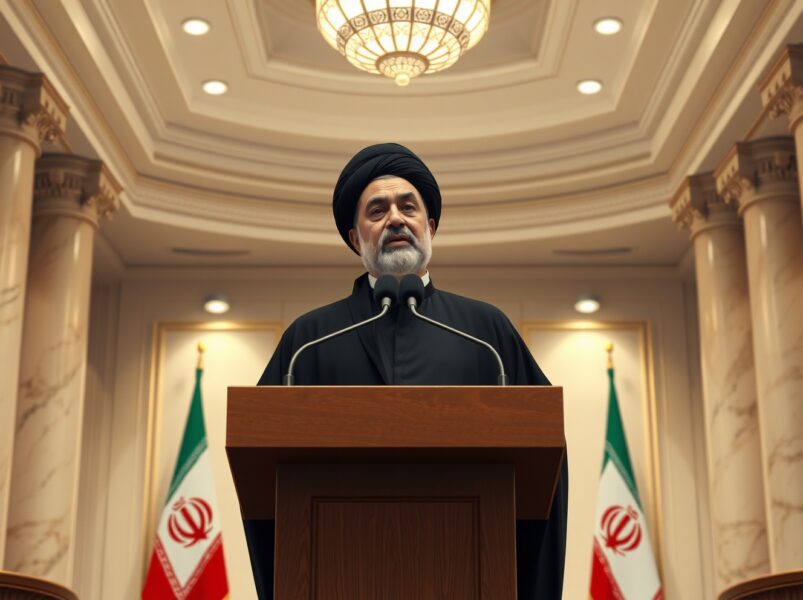
TEHRAN, Iran – In his first major statement since assuming leadership, Iran’s new Supreme Leader Mojtaba Khamenei has declared an unwavering commitment to avenging the Minab airstrike victims, specifically referencing the elementary school bombing that killed over 170 people. This declaration immediately escalates regional tensions and signals a continuation of Iran’s assertive foreign policy stance.
Iran’s New Leadership and the Minab Airstrike Response
Mojtaba Khamenei assumed the position of Supreme Leader following the passing of his father, Ayatollah Ali Khamenei, in late 2024. Consequently, his inaugural policy statement carries significant weight for regional observers. The new leader specifically referenced the Minab incident, which occurred in southeastern Iran’s Hormozgan Province. Furthermore, international investigators confirmed the attack targeted an educational facility during school hours.
The United Nations documented 174 fatalities in the Minab bombing, including 142 children and 32 teachers and staff members. Additionally, rescue teams recovered bodies from the rubble for three days following the explosion. Satellite imagery analysis shows complete structural collapse of the single-story school building. Moreover, the Iranian government has consistently blamed regional adversaries for the attack, though no group has claimed responsibility.
Historical Context of Iranian Retaliation Policy
Iran maintains a longstanding doctrine of proportional response to perceived aggression. For instance, following the 2020 assassination of General Qasem Soleimani, Iran launched missile strikes against U.S. bases in Iraq. Similarly, after the 2022 killing of nuclear scientist Mohsen Fakhrizadeh, Tehran attributed responsibility to foreign intelligence services and vowed retaliation.
Military and Strategic Implications
Regional security analysts note several potential response scenarios. First, Iran could employ proxy forces across the Middle East. Second, direct military engagement remains possible through conventional forces. Third, cyber warfare capabilities offer another avenue for retaliation. Defense experts estimate Iran maintains approximately 120,000 active-duty personnel in its regular army, with an additional 125,000 in the Islamic Revolutionary Guard Corps.
Recent Major Iranian Military Responses
Year
Incident
Iranian Response
Outcome
2020
Soleimani Assassination
Missile strikes on Ain al-Asad base
No U.S. fatalities reported
2022
Fakhrizadeh Killing
Increased nuclear activities
Advanced centrifuges installed
r>
2023
Israeli strikes in Syria
Drone attacks on shipping
Multiple vessels damaged
International relations scholars emphasize the calculated nature of Iranian retaliation. Typically, responses occur through asymmetric warfare rather than direct confrontation. Additionally, timing often coincides with diplomatic negotiations or international events. The Minab statement specifically mentions “martyrs’ blood,” terminology with deep religious and political resonance in Iranian discourse.
Regional Security Dynamics and Global Reactions
Neighboring countries have heightened security measures following Khamenei’s statement. For example, Saudi Arabia increased patrols along its eastern border. Similarly, the United Arab Emirates reinforced coastal defenses. Meanwhile, Israel placed its northern command on elevated alert status. The United States Central Command monitors Iranian military movements through satellite surveillance and intelligence assets.
European Union foreign policy chief Josep Borrell expressed concern about escalating tensions. He urged restraint and dialogue during a Brussels press conference. Conversely, Russian Foreign Minister Sergei Lavrov stated that countries have legitimate rights to self-defense. Chinese officials called for peaceful resolution through diplomatic channels. The United Nations Secretary-General offered mediation services to prevent further violence.
Key regional developments include:
Increased naval presence: Iranian vessels have conducted unusual maneuvers in the Strait of Hormuz
Proxy mobilization: Intelligence reports suggest heightened activity among Iran-aligned groups in Iraq, Syria, and Yemen
Diplomatic outreach: Iranian officials have contacted several neutral nations regarding potential mediation
Economic preparations: Tehran has reportedly increased strategic commodity reserves
Humanitarian Impact and Reconstruction Efforts
The Minab community continues recovering from the devastating airstrike. Reconstruction of the school facility remains incomplete six months after the attack. Psychological support services operate at capacity for surviving children and families. International aid organizations provide trauma counseling and educational support. However, security concerns limit foreign staff presence in the region.
Local officials report 83 children still require medical treatment for injuries sustained during the bombing. Additionally, 47 families lost their primary breadwinners in the attack. The Iranian government has allocated reconstruction funds through the Martyrs Foundation. Nevertheless, community leaders express frustration with the pace of recovery efforts. They emphasize the need for lasting security guarantees alongside physical reconstruction.
Legal and Investigative Proceedings
Iranian authorities continue investigating the Minab attack’s origins. Forensic teams collected missile fragments from the site for analysis. The government submitted findings to the United Nations Security Council. However, the investigation faces challenges regarding access to satellite data and intelligence sharing. International legal experts note potential war crimes implications if the attack deliberately targeted a protected civilian facility.
Conclusion
Supreme Leader Mojtaba Khamenei’s vow of revenge for the Minab airstrike establishes a definitive direction for Iranian foreign policy. The statement references specific casualties while signaling continued regional assertiveness. Consequently, Middle Eastern security dynamics face renewed uncertainty. Furthermore, the international community must navigate complex diplomatic challenges. Ultimately, the Minab tragedy and its political aftermath will influence regional stability for the foreseeable future.
FAQs
Q1: Who is Mojtaba Khamenei?Mojtaba Khamenei became Iran’s Supreme Leader in late 2024, succeeding his father Ayatollah Ali Khamenei. He previously served as a senior advisor and religious scholar within Iran’s political establishment.
Q2: What happened in the Minab airstrike?An airstrike destroyed an elementary school in Minab, southeastern Iran, killing over 170 people including 142 children. The attack occurred during school hours, causing widespread destruction to the educational facility.
Q3: How has Iran typically responded to such attacks?Iran generally employs asymmetric responses through proxy forces, cyber operations, or targeted military strikes. Responses often occur indirectly rather than through conventional warfare to avoid escalation.
Q4: What are the regional implications of this statement?Neighboring countries have increased security measures, while global powers monitor for potential escalation. The statement could affect ongoing diplomatic negotiations and regional alliance structures.
Q5: What reconstruction efforts are underway in Minab?The Iranian government and international organizations provide medical support, trauma counseling, and physical reconstruction. However, progress remains slow due to security concerns and logistical challenges.
This post Iran’s New Supreme Leader Vows Devastating Revenge for Minab Airstrike Martyrs first appeared on BitcoinWorld.
