
-
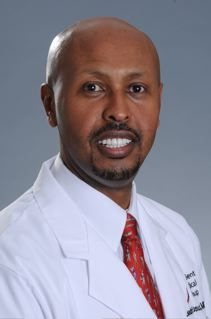
Georgia-based physician executive Bedri Yusuf, who spent more than 25 years leading health system operations, argues that physician burnout requires organizational solutions, not individual ones.
The Conversation Is Pointing in the Wrong Direction
Georgia, USA, 8th April 2026, ZEX PR WIRE — The healthcare industry has spent years discussing physician burnout as though it were primarily a personal problem. The framing centers on resilience, self-care, and individual coping strategies. Bedri Yusuf, a physician executive with more than 25 years of experience leading medical groups and health systems in Georgia, believes this framing misrepresents the nature of the problem and limits the quality of the solutions being applied.
What the Research Suggests and What Experience Confirms
Burnout among physicians is most commonly associated with systemic factors: administrative burden, inadequate staffing ratios, loss of autonomy, lack of recognition, and absence of psychological safety within teams. These are not individual problems with individual solutions. They are organizational conditions that organizational leadership is positioned to address.
Yusuf observed this directly over decades of physician recruitment and retention work. In his experience, physicians who left organizations rarely cited personal resilience as the deciding variable. They cited structural conditions: workloads that felt unmanageable, leadership that felt inaccessible, and feedback systems that registered complaint but produced no change. Where those structural conditions improved, retention improved alongside them.
What Structural Approaches Look Like in Practice
Yusuf advocates for several organizational practices that address the systemic roots of burnout rather than its surface symptoms. These include stay interviews, which are structured conversations with current physicians designed to surface concerns before they trigger departure decisions; transparent communication channels between frontline providers and senior leadership; leadership rounding that makes organizational leaders visible and accessible on a consistent schedule; and physician compensation models that align productivity incentives with quality and sustainability rather than volume alone.
At Gwinnett Medical Group, the implementation of a new physician leadership structure and a provider engagement forum, combined with flexible scheduling options including job-share programs, contributed to a 50 percent reduction in provider turnover over three years. At Northeast Georgia Physicians Group, a similar emphasis on recognition, open communication, and leader rounding brought provider turnover from 12 percent to 5.3 percent and sustained top-quartile employee engagement for five consecutive years.
What Healthcare Organizations Can Do Now
Yusuf encourages healthcare organizations to assess their current approaches to physician engagement and retention with the same rigor they apply to clinical quality metrics. The questions worth asking include: What are the primary reasons physicians have left this organization in the past three years? Are those reasons being addressed by current leadership practices? What forums exist for frontline providers to raise concerns and have those concerns acted upon?
If the answers are unclear, that itself is a signal. Organizations that do not know why their physicians leave are not positioned to prevent the next departure. The data is available if the infrastructure to collect and act on it is in place.
About Bedri Yusuf
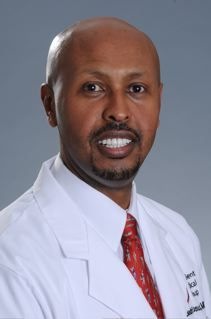
Bedri Yusuf is a physician executive and board-certified Internal Medicine physician based in Duluth, Georgia. He served as Chief Physician Executive of Northeast Georgia Physicians Group from 2019 to 2025 and as Vice President and Chief Physician Executive of Gwinnett Medical Group from 2015 to 2019. He holds an MD, an MBA from the University of Massachusetts Amherst, and a Lean Six Sigma Black Belt certification from the Georgia Institute of Technology. He is a Fellow of the American Association for Physician Leadership, a Senior Fellow of the Society of Hospital Medicine, and a Fellow of the American College of Physicians. He currently practices Internal Medicine at Tanner Health System in Georgia.
The Post Bedri Yusuf Makes the Case for Structural Approaches to Physician Burnout first appeared on ZEX PR Wire
